PANDORA WHITE SWISS SHEPHERDS
NEW OWNER INFORMATION
New puppy on the way? Please take the time to read through and get familiar with the information we have written in this page.
Many of the frequently asked questions we get are covered here, but if you have a question or concern that is not, don't hesitate to get in touch.
You can also refer back to this page any time throughout your puppy's growth stages.


Preparing your home
Before your puppy comes home, it is a good idea to have everything ready. Your new puppy will be curious, energetic and keen to explore, so a little preparation will make those first few days much easier for everyone.
A fenced, secure area
Make sure you have a fully fenced, secure area where your puppy can safely explore without being able to escape.
Collar & Lead
An adjustable collar around 20–30 cm with a secure clip (click-close) will fit most of our puppies when they leave us. Your puppy will grow quickly, so check the fit regularly and adjust or replace the collar as needed.
Once your puppy is a little older, a harness or fabric slip lead is our recommendation for walks and training.
Bed or Mat
Give your puppy a comfortable bed or mat in a quiet, safe place where they can rest undisturbed.
We recommend starting with an inexpensive bed. Puppies explore with their mouths, and chewing their bed is not uncommon! You can always upgrade to something more luxurious once your puppy has grown out of the (potentially) chewy stage.
Food & Water Bowls
We recommend having two sturdy bowls ready:
A stainless-steel bowl for food
A heavy, stable bowl for water that your puppy cannot easily pick up, tip over or carry around. We have a water bowl in every area they spend the most time (e.g. one in the backyard, one in the kitchen, or laundry and a hanging one in their crate (only if we leave them in there for a few hours and not during the night).
Puppy Toys
Have a few strong, good-quality puppy toys ready for chewing, playing and training. KONG-style toys, solid balls and sturdy tug toys are good options.
Avoid toys that can easily break apart or be swallowed, and always supervise your puppy with new toys until you know how they play with them.
Rotating toys (e.g 9 total, letting them have 2-3 at a time) can keep them interested and engaged with their toys.
Wire Training Crate
A crate is not essential, but we find a sturdy wire training crate extremely useful. It provides your puppy with a safe place to rest, a place for time out, is helpful with toilet training and also keeping your puppy safely contained when you cannot supervise them.
Choose a crate that is sturdy enough to last and large enough to accommodate your puppy as they grow. White Swiss Shepherds grow very quickly, so buying a crate with their adult size in mind can save you money in the long run. A divider can be useful while they are small as they are then less likely to use it as a toilet.
Choose Your Toilet Area
Before your puppy arrives, decide where you would like them to toilet. Ideally, choose an area that you will be happy with for the rest of your dog's life.
Once you have established a toilet area and consistently encouraged your puppy to use it, it becomes unfair to expect them to know that the same area is suddenly no longer acceptable when they are older. Choose carefully from the beginning!
Chews & Teething
Puppies need appropriate things to chew, particularly while they are teething. Providing suitable chews can help keep them occupied and encourage them to chew on their own toys rather than your furniture!
Natural chews such as dried animal ears, bully sticks and dried skin can be useful options. Some owners also use suitable raw meaty bones or antlers.
Always choose an appropriate size and supervise your puppy with chews and bones. They should be large enough that they cannot be swallowed whole, and any chew that becomes small enough to swallow should be removed.
Food
We recommend starting your puppy on the same food they have been eating with us. Keeping their diet consistent during the first few weeks helps avoid unnecessary tummy upset while they are already adjusting to a completely new environment.
Our puppies are fed ProPlan Puppy Sensitive skin & stomach biscuits, mixed with some raw meat.
Please have your puppy's food ready before they arrive.
If you would like to change your puppy to a different food or diet, wait until they are settled and comfortable in their new home, then make the change gradually by slowly introducing the new food alongside their existing food over 10 days, as shepherds have extremely sensitive stomachs.
Training Treats
Training treats are a very useful tool when teaching your puppy their name, encouraging good behaviour and beginning obedience and toilet training.
Keep treats small. Puppies don't need large amounts to know they have done something right and you don't want to overfeed them. You can also use praise, affection and play as rewards.
Poo Bags
Don't forget the simple essentials! Have a supply of biodegradable poo bags ready for walks, visits and cleaning up after your puppy.
It is much easier to enjoy puppyhood when you are prepared for the inevitable little messes along the way!
Picking a vet
This isn't technically part of preparing your home, but it is a good idea to choose your vet before your puppy comes home, particularly as their next vaccination will be due not long after.
Do a little research into the veterinary clinics in your area and choose one you feel comfortable with. Just like choosing a school for your children, the closest option isn't necessarily the best option!
Look for a practice that you feel listens to you, handles your puppy calmly and provides the level of care and professionalism you are looking for. If you don't feel comfortable with your choice, it is completely okay to change vets. Finding a veterinarian you and your dog trust and are happy to work with is an important part of caring for your dog throughout their life.

The first days & nights
When your puppy leaves us, around 8 weeks of age, they are experiencing a huge change. Until now, they have never truly been alone. They have had their mother, littermates and familiar surroundings around them every day.
It is completely normal for your puppy to feel unsettled at first. They may cry, especially during the first few nights, and will be looking to you for warmth, comfort and reassurance. Try to understand why they are crying rather than becoming frustrated with them. This is not your puppy being difficult, they are simply adjusting to a completely new world.
At the same time, it is important to establish your boundaries from the beginning. Be clear, consistent and calm about what you expect from your puppy, while also being patient, reasonable and caring. Your puppy needs to learn that you are a safe and reliable leader they can trust.
Sleeping & the Training Crate
We trust that you have your White Swiss Shepherd as an inside family dog. A wire training crate can be an excellent way to help your puppy settle into their new home. It gives them their own safe space while allowing them to be part of family life, without giving them the opportunity to chew your slippers or have an accident on the carpet when you cannot supervise them.
Only use the crate when you cannot actively supervise your puppy, and make it a positive experience. Give them a small treat when they go into their crate and allow them to learn that it is a safe and comfortable place to be.
Having the crate next to your bed during the first few nights, with your puppy being close to you while they adjust to their new surroundings, is a true tested method to make the adjustment as easy as possible. We have done this with our own puppies, and they have had no trouble moving to their own sleeping area after a week or two. When you remove all access to water from 8pm until 7am, your puppy only needs 1 toilet break during the night.
Leaving Your Puppy Alone
When you need to leave your puppy alone, make sure they are safe, secure and have access to fresh water. A crate or puppy-proofed area can help prevent them from getting into trouble while you are away.
When your puppy is inside, leaving a radio or television playing quietly can provide some familiar background noise and make the house feel less empty.
Remember that being alone is something your puppy needs to learn gradually. Start with short periods and slowly build up the amount of time they can comfortably spend alone. Don't expect an 8-week-old puppy to immediately cope with being left for long periods, they have spent their entire life surrounded by other dogs until now.
The first few days are about building trust, establishing routines and helping your puppy feel safe. Give them time, be consistent and enjoy getting to know each other.
White Swiss Shepherds were originally working dogs, bred to be with their owners, and can therefore not be left alone all day. If you are working full-time away from home, this is not the right breed for you.

What to bring to puppy pickup
The day has finally arrived! Picking up your puppy is very exciting, but remember that this is also a big day for your puppy. They are leaving their littermates and everything familiar to them and beginning their new life with you. The journey home should be as calm and comfortable as possible. Before you leave, make sure you have the following with you:
Collar & Lead
An adjustable collar around 20–30 cm with a secure clip (click-close) will fit most puppies. Even if you don't plan to walk your puppy during the journey, bring a lead for toilet stops and in case you need to safely move your puppy outside the vehicle.
Safe Car Transport
Your puppy should be securely contained during the journey home. A travel crate or appropriately fitted car harness are good options.
If possible, having two people travel to collect your puppy is a great idea, one person can concentrate on driving while the other can keep an eye on the puppy. It is certainly not essential, but can make the journey easier for everyone.
Never allow your puppy to roam freely around the vehicle or sit unsecured near the driver if you are on your own.
Be Prepared for Car Sickness!
Some puppies travel beautifully from day one, while others may feel quite unwell on their first car ride. This is a completely new experience, and excitement, nerves and motion can all contribute to car sickness.
Bring:
-
Old towels or sheets to protect the car
-
Wet wipes or tissues
-
A bottle of water
-
Plastic bags for any mess
-
Poo bags for toilet stops
-
Do not feed your puppy before the journey. Even a small amount of food can increase the chance of vomiting during what may already be a stressful journey.
-
BioPet Travel spray given 30 minutes before travelling can help against travel sickness
Toilet Stops
For journeys of more than approximately 2½ hours, we recommend making a safe toilet stop and giving your puppy the opportunity to stretch their legs and have a drink.
However, don't be surprised if your puppy doesn't toilet at all. Puppies are often nervous when travelling and may be too unsettled to go. Don't force it or worry if they don't go, simply give them a little time and continue your journey.
Until your puppy is fully vaccinated, avoid letting them walk around high-traffic dog areas such as public rest stops or dog parks. Choose a quiet, low-risk area and follow your veterinarian's advice regarding safe places for your puppy to walk.
What to Expect on the Journey Home
Every puppy is different, and there is no “right” way for them to react to their first journey.
Your puppy may:
-
Sleep for most of the journey
-
Whine or cry, particularly at the beginning
-
Pant or drool
-
Seem restless or unsettled
-
Be very quiet and withdrawn
-
Become carsick or vomit
-
Eventually relax and fall asleep
All of these can be normal reactions to the excitement and stress of leaving their familiar surroundings and travelling in a car.
Don't panic if your puppy cries. They have just left their littermates and everything they know, so it is understandable that they may be unsettled. Keep your voice calm and reassuring, and let them settle.
If they are sick, simply clean them up and carry on. Most puppies become much better travellers once they learn that car rides are a normal part of life.
Airport Pick-Up
If your puppy is travelling by plane, we will email you all the relevant travel information before departure and answer any questions personally.
When collecting your puppy from the airport, please remember to bring:
-
Photo ID
-
Your reservation/collection number
-
Collar and lead
-
Water and a bowl
-
Poo bags
-
Wet wipes, tissues and plastic bags
-
Old towels or sheets
-
A suitable crate or car harness for the journey home
We will provide you with the relevant flight and collection information ahead of time, so please make sure you read everything carefully before travelling to the airport.
Most Importantly…
The journey home is your puppy's first adventure with you. Keep things calm, be patient and don't expect too much from them.
Once you arrive home, take your puppy to their designated toilet area, then allow them some quiet time to explore their new surroundings and settle in.

Feeding
When your puppy leaves the home they were born in at around 8 weeks of age, they are experiencing a huge change. Until now, they have never truly been alone. They have had their mother, littermates and familiar surroundings around them every day.
It is completely normal for your puppy to feel unsettled at first. They may cry, especially during the first few nights, and will be looking to you for warmth, comfort and reassurance. Try to understand why they are crying rather than becoming frustrated with them. This is not your puppy being difficult, they are simply adjusting to a completely new world.
At the same time, it is important to establish your boundaries from the beginning. Be clear, consistent and calm about what you expect from your puppy, while also being patient, reasonable and caring. Your puppy needs to learn that you are a safe and reliable leader they can trust.
We feed our puppies ProPlan Puppy Sensitive skin & stomach biscuits, mixed with a small amount of raw meat purchased from a pet shop or reputable online supplier.
For chewing, teething and dental stimulation, you can give a large brisket bones that are too large for the puppy to swallow whole, dried cow, pig or deer ears, deer antlers, bully sticks and dried skin pieces. These products are readily available from pet shops and online stores. Always supervise your puppy when they are enjoying a chew, and choose items that are appropriate for their age and size.
We also like to add Micromed's spray-on probiotic to their raw food. Micromed is a New Zealand brand that supports digestive and gut health and can be particularly useful for dogs with sensitive stomachs. White Swiss Shepherds can sometimes have sensitive digestive systems, and we have found this product very helpful with our own dogs.
Where to buy
ProPlan Puppy Sensitive skin & stomach biscuits can be purchased online and are also available from many pet shops throughout New Zealand. We provide you with a free 3 kg bag to start and give a discount voucher for the next big bag.
How much should you feed?
We recommend feeding your puppy twice a day.
As a general guide, an adult White Swiss Shepherd male may weigh around 30–40 kg, while an adult female may weigh around 25–35 kg. Individual dogs can naturally vary, so these numbers should be used as a guide rather than a target.
When looking at your puppy, aim for a lean, healthy body condition. Your puppy should not be skinny, but they should certainly not be carrying excess weight. A lean puppy is much healthier than a puppy that is allowed to become too heavy during its growth.
We recommend continuing to feed your adult White Swiss Shepherd twice a day rather than providing one large meal.
Do not overfeed your puppy
One of the most important things you can do for your White Swiss Shepherd puppy is avoid overfeeding.
A growing puppy should develop slowly and steadily, rather than being encouraged to grow as quickly or as heavily as possible. Excessive weight and rapid growth place unnecessary stress on developing bones and joints and can increase the risk of orthopaedic problems, including hip and elbow issues.
Keeping your dog lean while they are growing and matured is one of the most important things you can do to protect their joints.
Growing and Fussy Phases
As puppies get older, they may go through periods of rapid growth where they suddenly look very lean and seem to gain little weight. This can be a completely normal part of growing, much like the phases many teenagers go through. During these periods, they may look a little gangly or slim before filling out again.
Older puppies can also go through a phase of becoming extremely fussy about their food. This is quite common and, provided your puppy is otherwise healthy, is usually nothing to worry about.
If you do decide to change your puppy's food, always make the change gradually. Mix a small amount of the new food with their usual food and slowly increase the proportion of the new food over 10 days. This gives their digestive system time to adjust.
There is, however, a difference between a dog genuinely not tolerating or responding well to a particular food and a dog simply deciding they would prefer something else. If your puppy is healthy, maintaining a good body condition and has no digestive problems, there is no need to constantly change their diet because they are being fussy.
Sometimes puppies learn that refusing their food results in something more exciting being offered. Try not to fall into the trap of continually changing foods or adding treats to tempt them to eat. A healthy dog will generally eat when they are hungry.
If your puppy consistently refuses food, is losing weight, has ongoing digestive problems, or seems unwell, this is different from ordinary fussiness and should be discussed with your veterinarian.

Coat & Nail maintenance
When your puppy is young and still has their puppy coat, there is generally not a lot of coat maintenance required. However, it is important to brush your puppy regularly from an early age so that grooming becomes a normal and comfortable part of their routine.
Grooming is also a great opportunity to teach your puppy to accept being handled. Regularly check their ears, paws and eyes, and gently open their mouth to look at their teeth. Your puppy does not need to love every part of this straight away, but learning to calmly accept these checks will make life much easier later on, particularly when they need to be examined by a vet.
Grooming the Puppy Coat
A growing puppy often develops very soft, longer fur around the ears. This area needs particular attention. Use a comb around the ears every other day to prevent the soft fur from becoming tangled or matted.
For young puppies, we recommend using a puppy slicker brush with protective knobs on the ends of the pins. See the picture below for an example.
Grooming the Adult Coat
Once the puppy coat has been replaced by the adult coat, regular grooming becomes more important to keep the coat clean, neat and free from mats.
White Swiss Shepherds need a good brush at least twice a week. Pay special attention to areas where knots tend to form, especially behind the ears and the long coat around the bum and check these areas regularly.
For regular grooming, we use a large slicker brush.
A rake can be used on the less sensitive areas of the coat, such as the body, but avoid the belly. It can also be used on the tail, but not on the legs. The rake can be used daily when your dog is changing coats and loses all the undercoat.
The comb is particularly useful around the ears, where the softer fur can tangle easily.
Coat Changes
White Swiss Shepherds shed their undercoat heavily when they change from their summer to winter coat and again from winter to summer. During these periods, you will notice a significant amount of loose undercoat coming out.
This is when we actively use a rake brush It is very effective at removing the loose undercoat and makes the coat change much easier to manage.
During a major coat change, we brush our dogs daily for around two weeks using the rake. brush Once the majority of the undercoat has been removed, we return to our normal grooming routine of twice a week with a slicker brush.
Nails
I can tell you now, no puppy likes having their nails clipped! Even puppies who are generally happy to be handled may try to pull their paws away when it comes to nail clipping.
However, this is exactly why it is important to start getting your puppy used to it while they are young. Handle their paws regularly, gently press and hold each toe, and let them become familiar with the sensation of having their feet touched. You can start by simply touching the nails and rewarding your puppy, before gradually introducing the nail clippers.
Do not expect your puppy to sit happily through a full nail trim straight away. Short, positive sessions are much more effective than forcing the process. The goal is to teach your puppy that having their paws handled and nails trimmed is simply a normal part of life.
If you are not confident trimming nails yourself, ask your vet or a professional groomer to show you how to do it safely. Getting your puppy comfortable with the process from an early age will make nail care considerably easier as they grow into a strong adult dog.
Puppies need their nails clipped monthly. Adult dogs need their nails clipped every 2 months.
It is important to keep the nails trimmed to the right length, when the nails are too long your dog will not walk properly and this can affect the whole body negatively.
Cormorant Garamond is a classic font with a modern twist. It's easy to read on screens of every shape and size, and perfect for long blocks of text.

Exercise
Young puppies need plenty of rest and should not be over-exercised while their bones, joints and muscles are still developing. With a growing White Swiss Shepherd, it is important to let your puppy build strength gradually and naturally.
A simple guideline to follow is “one minute per week of age” for structured walks. For example, a 10-week-old puppy can have around 10 minutes of walking at a time. You can take your puppy out several times a day, as long as each outing is kept short and they have plenty of time to rest in between.
The same principle applies to energetic play with people or other dogs. At 10 weeks, for example, keep active play to around 10 minutes at a time. Puppies often don't know when they have had enough, so it is your responsibility to recognize when they are getting tired and give them a break. We recommend crate training not only for sleep but also as their 'safe and rest' place.
Protect Those Growing Joints
During the first year, your puppy's bones and joints are still developing. White Swiss Shepherds are a larger breed, so taking care with high-impact or repetitive activities is particularly important. Until your dog is at least 12 months old, and preferably around 18 months, we recommend avoiding:
- Jogging or running for extended periods.
- Repetitive jumping
- Regularly running up and down stairs
- Jumping in and out of cars or from heights
- High-impact games such as repeated ball or frisbee throwing
- Activities that encourage sudden twisting, turning or awkward landings
These types of activities can place unnecessary stress on developing joints, including the hips and elbows. Instead, encourage gentle play, relaxed walks and plenty of opportunities for your puppy to explore and learn at their own pace.
Once your dog is mature and their joints have fully developed, you can gradually increase their exercise and enjoy longer walks, running, jumping and more active games together.
The key with a growing puppy is quality over quantity. A little exercise, lots of rest, and plenty of mental stimulation will help your puppy develop into a strong, healthy and confident adult dog.
Exercise Needs as an Adult
Once your White Swiss Shepherd has finished growing, remember that you have a working dog breed. They are intelligent, energetic and naturally driven to be active, both physically and mentally.
A short walk around the block on a lead, followed by spending the rest of the day in the backyard, is not enough exercise or stimulation for adult White Swiss Shepherds. They need opportunities to move, explore, learn, use their brains and have a purpose.
The breed originates from herding dogs that spent much of their time on the move and working alongside their handler, with a job to do. Although the White Swiss Shepherd has evolved considerably as a modern companion dog, many of those natural instincts and characteristics remain. They still have a strong need for activity, interaction and mental stimulation.
If an adult White Swiss Shepherd is not getting enough exercise and mental stimulation, you may notice this energy coming out at home. They can become restless, constantly looking for something to do, excessively demanding attention, destructive or generally difficult to settle.
This is not necessarily a "naughty dog". Often, it is simply a dog with energy and drive that has not had an appropriate outlet. What looks like excessive energy at home can be frustration caused by not getting enough physical exercise, mental stimulation or meaningful interaction.
Your adult dog should therefore have regular opportunities for longer walks, exploring different environments, training, obedience, games, scent work, agility or other suitable activities. You do not need to turn every dog into a competitive working or sporting dog, but you do need to give them enough to do to satisfy both their body and their mind.
A White Swiss Shepherd that receives appropriate exercise, training and mental stimulation is much more likely to be able to relax and settle calmly at home afterwards.
Before increasing strenuous exercise significantly, remember that your dog's individual fitness, age and physical condition should always be taken into account. Build activity gradually and give your dog time to develop the strength and endurance needed for the activities you want to enjoy together.

Training
Puppy training is about much more than teaching your puppy to sit or stay. It is also about socialisation, building a strong bond & trust and learning basic obedience and boundaries that will set your dog up for life.
Be patient and consistent when training your puppy. They are learning a completely new language, and it is your job to gently guide them and help them understand what you are asking. The time and effort you put into training now will save you countless hours later.
We strongly recommend that every new puppy owner enroll in a puppy training course of at least six weeks. Puppy classes are available in most towns and are an excellent way to build your puppy’s confidence, social skills and basic obedience in a controlled environment.
Puppy classes are only the beginning, however. We encourage you to continue training throughout your dog’s life, whether your goal is to compete in showing, agility, obedience or rally-o, or simply to have a well-mannered family companion. A well-socialized and obedient dog is a joy to live with and can confidently enjoy all the experiences life has to offer.
Training Your Shepherd
Swiss Shepherds are among the most intelligent, loyal and willing-to-please breeds. This makes them incredibly rewarding to train and means they can learn quickly when training is consistent and positive.
They are also a high-energy, confident breed that can test boundaries and benefit from having a calm, consistent leader. Without sufficient training, that intelligence and energy can become challenging! Put the work in early and you will reap the rewards for many years to come.
Keep Training Positive
One of the easiest behaviours to teach is “sit.” A simple way to practise is at mealtimes. Hold your puppy’s food bowl, stand straight and calmly and ask them to sit. Don't push or physically place them into position - simply wait patiently. As soon as they sit, say “good sit” and give them their food. After just a few meals, most puppies will quickly begin to understand what “sit” means.
Whatever you are teaching, remember to reward your puppy when they get it right. When they are young, it can be helpful to keep a few tiny treats in your pocket so you can reward good behaviour throughout the day.
Called your puppy and they come running? Treat.
Asked them to “leave” your favourite slipper and they let go? Treat.
Settled calmly when asked? Treat.
You don't need to rely on treats for everything, particularly if you are mindful of how much your puppy is eating. Your voice and praise are just as important. A happy “good boy/girl!” and plenty of affection help build the bond between you and your puppy. Continue using praise throughout your dog’s life - it is one of the simplest and most powerful rewards you can give them.
Use your puppy’s play drive as a reward too. If they have a favourite ball or toy, use a short game as a reward after they have done something you asked. Training should be enjoyable for both of you, and wherever possible, always finish a training session on a positive note.
Don't forget to continue praising your teen/adult dog too. This doesn't always need to be in the form of a treat but still an excited 'good boy/girl'. Training often moves patient teaching for a puppy who is learning, into expecting that your adult should always listen because they are trained and know better. Although you are right to having this expectation, when training moves into this phase people often stop rewarding the good behaviour. This is a big mistake, and don't be surprised if your dog then stops listening. Why would they, if they never get rewarded or praised for doing something good?
Equality important is to let your puppy and adult dog know if you are not happy with their behaviour. However only telling them off, usually doesn't work. You need to show your puppy or adult dog what is expected instead. Teach them to make better choices.

Toilet training
Start toilet training from the moment you bring your puppy home. Take your puppy outside to the place where you want them to toilet and, where possible, use the same spot each time. If you don't want your adult dog toileting on the lawn, don't use the lawn as their toilet area when they are a puppy.
The habits your puppy learns during their first few months can be difficult to change later, so it is worth establishing good habits from the beginning.
Take your puppy outside frequently, at least every hour when they are awake, and always after waking up, eating, drinking, playing or becoming particularly active. Take them to their designated toilet area and be patient. Most puppies will need to poo after eating, so give them a little time rather than rushing them back inside.
When your puppy gets it right, praise them immediately after they have finished. Use happy words, affection and/or a small treat to let them know they have done exactly what you wanted. Timing is important: praising too early can distract them from what they are doing, while praising too late may make it difficult for them to understand what they are being rewarded for.
Overnight
At the start, your puppy will likely need to go out during the night too. Once is generally enough, and shouldn't last more than three weeks of them being home.
Keep nighttime toilet breaks quiet, calm and boring. Take your puppy straight outside to their usual toilet area, give them time to do their business, praise them quietly when they are finished, and then head straight back to bed.
Be mindful that puppies quickly learn that waking you up can lead to attention or playtime. If your puppy is asking to go outside but doesn't actually toilet, it may have turned into an attention game instead. Avoid turning the outing into a game or social time. You want them to learn that nighttime outings are for toileting, not for getting up to play.
As your puppy develops better bladder control, they will gradually become able to sleep for longer without needing to go outside. In the evening, make sure your puppy has a final toilet break before bed.
Some owners choose to use a puppy pad or newspaper in an easy-to-clean area as a temporary backup. However, remember that this can also teach your puppy that toileting indoors is acceptable, so it is best viewed as a short-term solution rather than a replacement for taking them outside.
When your puppy is young, we recommend removing their water bowl 8pm until 7am, provided they have had free access to fresh water throughout the day. This can help reduce the likelihood of overnight accidents while they are still developing bladder control. Make sure your puppy has had plenty of opportunities to drink during the day and always offer fresh water again first thing in the morning.
Using a Crate
A properly introduced crate can be a very useful tool for toilet training. Most puppies naturally prefer not to soil their sleeping area, so a crate can help them learn to hold on until they are taken outside.
It is important that the crate is appropriately sized and that your puppy is taken outside frequently enough that they are not being asked to hold their bladder for too long.
Be Patient!
Every puppy is different. Some puppies become reliably toilet trained very quickly, while others may still have occasional accidents at six months or beyond. Don't become frustrated, accidents are a normal part of the learning process and the reality of having a puppy.
With consistency, patience and plenty of praise, your puppy will get there!
And don't forget to be prepared when you take your puppy visiting. We always carry a few baby wipes and plastic bags with a young puppy, just in case there is an unexpected accident. It's much easier to enjoy your visit when you're prepared for the occasional little mishap!
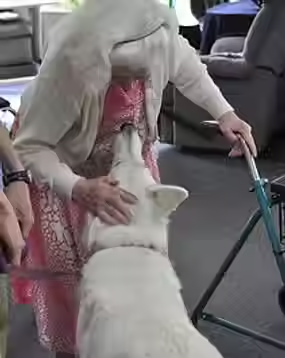
Socialisation
Once your puppy has had a few days to settle into their new home, one of the most important things you can do is start socialising them. Done well, socialisation during the first two years of life will have a lasting impact on your dog's confidence and ability to cope with the world around them.
Socialisation is not about overwhelming your puppy with as many experiences as possible. It means gently and gradually introducing them to people, animals, places, sounds, surfaces and everyday situations, allowing them to experience new things at their own pace.
Every time your puppy sees, hears, smells or experiences something they haven't encountered before, they are learning about the world. Your role is to provide calm, steady guidance and show them that new experiences are nothing to be afraid of. With positive experiences and your support, your puppy can grow into a confident, friendly and adaptable adult dog.
Everyday Socialisation
You don't need to organise elaborate outings to socialise your puppy. Everyday life provides countless opportunities:
-
Visiting friends, family or neighbours
-
Meeting new people at home or on walks
-
Spending time with friendly, well-socialised dogs
-
Meeting children of all ages, particularly if you don't have children at home (supervised at all times)
-
Getting used to cars, trucks, bicycles and other traffic
-
Learning to travel calmly and safely in the car
-
Experiencing different surfaces, environments and sounds
-
Exploring new objects, such as a rugby ball, umbrellas or household items
The goal is not for your puppy to interact with everything they see. Sometimes simply watching something new from a safe distance is excellent socialisation.
Start Early - But Keep It Safe
Start socialising your puppy as soon as they come home rather than waiting until they have completed all their vaccinations. Early socialisation is important, but it should be done sensibly. Before your puppy is fully vaccinated, choose safe environments and interact with healthy, fully vaccinated dogs rather than taking them to places where they may be exposed to disease.
Slow and Positive
With a White Swiss Shepherd, less can often be more. They are naturally alert and sensitive dogs and can become overwhelmed if they are exposed to too much, too quickly.
You don't need to socialise your puppy every day or introduce them to something new constantly. Two calm, positive experiences a week are far better than being overwhelmed by ten. Give your puppy plenty of quiet time at home to rest and process everything they have experienced.
Simultaneously, it is also valuable for them to learn they shouldn't engage with everything or everyone they come across. Learning non reactiveness and listening to you, despite being in a high stimulative environment produces a confident and well adjusted dog.
Watch your puppy's body language and allow them to retreat or take a break if they are uncomfortable. Never force them towards something they are frightened of. A bad or overwhelming experience can have a much greater impact than simply not having experienced something yet.
Saying 'no'
Socialisation does not mean your puppy needs to be touched or greeted by everyone they meet. If you notice your puppy becoming uncomfortable or overwhelmed, it is perfectly okay to step in and say:
“No, sorry, my puppy is feeling a little overwhelmed right now.”
It may feel awkward at first, but you don't owe a stranger access to your dog. By calmly stepping in and giving your puppy space, you are teaching them something incredibly important: you are there to listen, protect and support them. This helps build trust and confidence in your relationship.
When you do allow someone to pat your puppy, we recommend asking them to gently stroke under the chin or on the chest, rather than reaching over the top of their head. A hand coming down over a puppy's head can feel intimidating or threatening, whereas approaching from underneath or gently on the chest is generally less overwhelming.
Remember, a successful socialisation experience doesn't always mean your puppy interacts with someone. Sometimes simply watching people from a comfortable distance and remaining relaxed is the perfect experience.
This also applies for if people come to your home and your puppy is anxious or barky. Tell your visitors to simply ignore the puppy, and let the puppy come up to them in their own time. More shy puppies thrive with this method - you will notice they generally don't approach people that demand their attention or touch, and love people that don't make a big deal out of them and stay calm.
If you have the opposite behaviour, when your puppy is super outgoing and wants to be the center of attention, is jumping up or too energetic, ignoring the puppy or putting it on a lead until the pup is fully settled is the best way to change this behaviour.
Also putting in boundaries like teaching them to stay on their mat at first, or being in their crate for the first 10 minutes until they settle before giving the pup any attention is absolutely the most important training for you and your puppy when you come home or when visitors arrive.
Continuing as they grow
Socialisation should continue well beyond the first 16 weeks. White Swiss Shepherds can go through several developmental and fear periods as they mature, so continue gently introducing new experiences and supporting your dog through them for at least the first 2 years of life.
Take it slowly, keep it positive and let your puppy learn at their own pace. Your calm guidance today will help build the confident, well-adjusted companion you want for years to come.


General health
Vaccination
We vaccinate our puppies at 7 weeks of age. The first vaccination is done while they are still with us, and the second and third vaccinations are done by the new owner.
Vaccination scheme in Aotearoa - New Zealand recommended by the Veterinarian Association:
7 weeks old- 1st vaccination: DHP Parvo
11–12 weeks old- 2nd vaccination: DHP Parvo and 1st vaccination for Leptospirosis
13 weeks old - Your puppy is protected against Parvo and can start going out and experiencing the world.
15–16 weeks old - 2nd vaccination for Leptospirosis
If you are planning to use doggy daycare, boarding kennels or similar facilities, check their requirements, as many will also require a Kennel Cough vaccination.
Please follow the above scheme and do not over-vaccinate your puppy, as this can have a lifelong effect on the immune system.
You can repeat the DHP vaccine once every 3 years. (not yearly, that is an outdated vet practice no longer recommended by the NZ Vet Association and can cause immune and allergy issues).
You can also ask your vet about titre testing, which can give you an accurate indication of whether your dog still has protection, and whether another vaccination is needed.
Gut Health
A puppy's tummy can be quite sensitive, especially during the first few weeks after coming to their new home. It is not unusual to see some diarrhoea after moving house, a vaccination, a change in food or another stressful experience.
We like to support the gut naturally where we can. If your puppy has some digestive upset, giving a good dog-specific probiotic for around 10 days with their food can be helpful.
We like Micromed and Olive's Kitchen and In-Sideout, all these pro and pre biotics products are especially to support your dogs gut health.
If your puppy has ongoing or severe diarrhoea, is vomiting, not eating or seems unwell, don't assume it is simply a sensitive tummy. Give your vet a call.
Worming
Puppies and young dogs need regular worming, particularly while they are young and exploring everything with their mouths.
Our general worming schedule is:
3 months • 6 months • 9 months • 12 months
After that, we worm our dogs twice a year.
You can give Drontal (sold at vet clinics) which covers all worms.
There are also more natural options available, and some owners prefer to take a more holistic approach to parasite management.
Apple cider vinegar worming products for dogs and horses are very effective but need to be given regularly and not all dogs like the taste in their food or drinking water.
Whatever approach you choose, make sure you are actually monitoring and protecting your dog against worms.
Flea Treatment
We also prefer a more natural approach to flea prevention where possible and use products such as:
-
Bio Pet Fleas & Ticks
-
Organic Neem Pet Spray
-
Nature Pharm Flea & Skin Support
These are the products we have chosen to use with our own dogs.
Of course, there are situations where a stronger treatment may be appropriate. If you have a heavy flea problem in your area or your dog is struggling with fleas despite your usual prevention, products such as Frontline or Revolution are available through vets and online retailers, including formulations suitable for young dogs.
We personally do not use or recommend Bravecto.
We believe the aim should be to protect your dog from parasites while also being mindful of what we are putting into and onto their body. Every dog and every environment is different, so choose an approach that works for your dog and be prepared to adjust it if circumstances change.
Remember: treat the whole household
If you discover fleas or worms, don't just treat the one animal showing the problem. All dogs and cats in the household should be considered, otherwise you can end up treating one animal while the problem continues to circulate through the others and the environment.

De-sexing
As part of the legally binding contract signed before taking your puppy home, you agree that your puppy will be spayed or neutered at the appropriate age.
For our White Swiss Shepherds:
-
Females: spayed between 9 and 18 months of age
-
Males: neutered between 12 and 24 months of age
In some circumstances, when the owner can guarantee that the dog/bitch will not be accidentally mated, you can delay neutering/spaying by mutual agreement with us and confirmed in writing.
Please do not de-sex your puppy too early
Please do not allow your puppy to be spayed or neutered before the minimum age specified in your contract.
We are very firm about this. Early desexing may be appropriate for some breeds and individual circumstances, but we do not believe it is appropriate for our growing White Swiss Shepherds.
These are large, slow-maturing dogs, and hormones play an important role in their physical development. We want them to have time to mature properly before removing those hormones. Research has also found associations between early-age desexing and an increased risk of certain orthopedic (like hip and elbow dysplasia) and other health problems in some dogs.
Please do not let anyone pressure you into desexing your puppy earlier simply because it is their usual practice. If your veterinarian recommends an earlier procedure, please contact us first so we can discuss it with you.
Your female's first season
Female puppies will generally have their first season somewhere around 9–12 months of age, although every dog is different and it can happen earlier or later.
When your female comes into season, you will need to be particularly careful. She should be kept securely within your property and away from male dogs. We also recommend avoiding public dog areas and walks where she may come into contact with male dogs for approximately three weeks, or until her season has completely finished.
The season cycle is as follows:
Day 1-10 bleeding but not fertile or receptive to male dogs yet
Day 11-20 bleeding or less bleeding or not bleeding, FERTILE period, receptive to male dogs, please no contact with other dogs at all
Day 21-28 bleeding or less bleeding, no longer fertile
VERY IMPORTANT: STOPPING BLEEDING DOES NOT MEAN THE SEASON IS OVER
Do not assume your female is safe just because she has stopped bleeding.
The fertile part of the season can occur after the obvious bleeding has reduced or stopped, on day 10 to 20 after the first day of bleeding, so this is actually a time when you need to be especially careful. A male dog can also be extremely persistent when a female is in season. And your female can suddenly turn into a Houdini, trying to open doors and jumping fences.
Do not take the risk. Keep her safely contained and away from male dogs for the full three weeks as soon as she starts bleeding.

Car travel
Getting your puppy comfortable with travelling in the car is an important part of their early socialisation. Some puppies may experience motion sickness or feel a little unsettled at first, especially on their first few journeys. This usually improves with time, and taking your puppy on short, regular car trips is a great way to help them become confident travellers.
Keep the first trips short and positive where possible. There is no need to make every car ride a big outing. Even a few minutes around the neighbourhood can help your puppy learn that getting in the car is simply a normal part of life.
Travel Sickness:
No food in the 2 hours before travelling
BioPet Travel spray 30 minutes before travelling
Packing list:
-
Collar and lead
-
Wet wipes or tissues, a bottle of water and a plastic bag, in case your puppy gets sick in the car
-
A car harness, travel crate or secure towel, depending on how your puppy will be travelling
-
Poo bags for cleaning up if your puppy needs a toilet stop
-
A dog bowl and fresh water if the journey is longer than one hour
For longer journeys, plan ahead and give your puppy an opportunity to stretch their legs and have a toilet break. Remember that a nervous puppy may not actually go when you stop, so don't be concerned if they simply want to get back into the car.
Most importantly, don't make a fuss if your puppy is sick. They are not doing it deliberately, and getting upset will only make the experience more stressful for them. Clean them up, stay calm and continue helping them build positive experiences with travelling.
Once they are used to the car, they tend to love it because it means a new adventure, and it becomes fun to go to new places!